February 9, 2010

Final QB Ratings

saints_drew_brees1 Dave Berri just posted his final NFL quarterback ratings for the 2009 season, which are always interesting.

Schaub moved up into the top quarter of NFL QB’s, but he has a ways to go before he is playing on the level that Rivers and Brees played on this past season. Interestingly, there is a big drop off in production between Schaub at no. 8 to  Roethlisberger at no. 9.

Except for the truly great ones, QB’s are notoriously inconsistent from season to season, especially in comparison to basketball players and hitters in baseball. For example, Favre went from the 27th ranked QB last season to no. 4 this past season! That’s due primarily to the more complementary nature of football. Stated another way, it’s hard to be a productive QB when laying on one’s back or running for one’s life.

Thus, statistics really don’t tell us much about NFL QB’s (except when that QB is as bad as David Carr) other than the fact that a particular QB performed well this season does not necessarily mean that he will do so again next season.

Are you listening, Chron cheerleaders

Posted by Tom at 12:01 AM | Comments (1)

February 8, 2010

The wisdom of Will

georgewill Tax simplification has been a frequent topic on this blog. So, I was enthused to see George Will knock the ball out of the park in describing the U.S. income tax system while addressing the issue in his WaPo Sunday column:

“Today's tax system was shaped by sadists who were trying to be nice: Every wrinkle in the code was put there to benefit this or that interest.”

The proposals that Will addresses would do more for the American economy than virtually any other proposal on the table at this point. Unfortunately, the proposals have virtually no chance of being implemented.

So it goes.

Posted by Tom at 12:01 AM | Comments (0)

February 7, 2010

Super Bowl XLIV Primer

nfl Too much is written about the Super Bowl each year, so it is increasingly difficult to separate the wheat from the chaff. The following are a few pieces that will provide a good primer for this year’s contest:

This Hank Gola/NY Daily News article provides a wonderful overview of the colorful history of the New Orleans Saints, including the eminently forgettable Charlton Heston flick, Number One.

I tend toward being a stathead, so this Football Outsiders post provided the requisite statistical analysis of the matchup between the Saints and the Colts. The bottom line – it’s a pretty darn even matchup.

If reading that post chloroformed you, Larry Ribstein lucidly explains why he doesn’t even watch the Super Bowl.

I’ve noted before that we tend not to appreciate the fact that Colts QB Peyton Manning may be the all-time greatest NFL quarterback and certainly is one of the top three. This Judy Batista/NY Times article updates Manning’s superb legacy while noting that his excellence is more a product of preparation, discipline and insight than physical tools. Also, check out this cool graphic on how Manning makes a split second read of the defense.

Finally, this equally interesting Greg Bishop/NY Times piece notes the not well-known fact that under-sized Saints QB Drew Brees – who has had one of the best four-season runs of any QB in NFL history – is actually one of the best athletes in the NFL. Brees explains in the video below how his San Diego-based personal trainer put together a fitness protocol that helped Brees recover from a devastating shoulder injury and prepares him for the grueling NFL season:

Posted by Tom at 12:01 AM | Comments (0)

February 6, 2010

Kuroshio Sea

Posted by Tom at 12:01 AM | Comments (0)

February 5, 2010

Justice Kennedy notices a couple of troubling issues

justice_anthony_kennedy Overcriminalization of life and the appalling condition of our country’s prison facilities have been frequent subjects on this blog over the years. At least one member of the U.S. Supreme Court has taken notice:

U.S. Supreme Court Justice Anthony M. Kennedy criticized California sentencing policies and crowded prisons Wednesday night, calling the influence that unionized prison guards had in passing the three-strikes law "sick."

In an otherwise courtly and humorous address to the Los Angeles legal community, Kennedy expressed obvious dismay over the state of corrections and rehabilitation in the country. He said U.S. sentences are eight times longer than those issued by European courts.

"California now has 185,000 people in prison at $32,500 a year" each, he said. He then urged voters and officials to compare that expense to what taxpayers spend per pupil in elementary schools.

"The three-strikes law sponsor is the correctional officers' union and that is sick!" Kennedy said of the measure mandating life sentences for third-time criminal offenders.

As Doug Berman points out, perhaps Justice Kennedy’s remarks are a prelude to the Supreme Court’s consideration of several important sentencing cases in its upcoming term. At some point, we need to ask ourselves the question – why are we doing this to ourselves?

Posted by Tom at 12:01 AM | Comments (2)

February 4, 2010

Different eras, similar swings

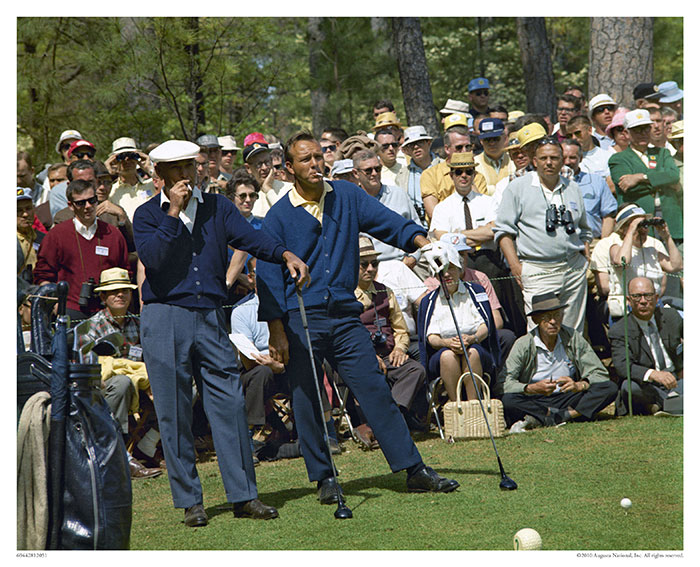
Ben Hogan and Anthony Kim.

Posted by Tom at 12:01 AM | Comments (0)

February 3, 2010

How to complete a census

2010 is a census year, so it’s a good time to recall one of the best Saturday Night Live skits ever, Christopher Walken answering a census taker’s questions. Enjoy.

Posted by Tom at 12:01 AM | Comments (0)

February 2, 2010

Running into the abyss

cliff fall 17th century philosopher Blaise Pascal observed in his Pensées that “we run heedlessly into the abyss after putting something in front of us to stop us seeing it.”

Neil Barofsky, the Special Inspector General for the Troubled Asset Relief Program, observed something similar in his quarterly report regarding the troubled TARP program:

The government's bailout of financial institutions deemed "too big to fail" has created a risk that the United States could face a worse fiscal meltdown in the future, an independent watchdog assigned to review the program told Congress on Sunday.

The Troubled Assets Relief Program, known as TARP, has not addressed the problems that led to the last crisis and in some case those problems have festered and are a bigger threat than before, warned Neil Barofsky, the special inspector general at the Treasury Department.

"Even if TARP saved our financial system from driving off a cliff back in 2008, absent meaningful reform, we are still driving on the same winding mountain road, but this time in a faster car," Barofsky wrote.

Barofsky wrote the $700 billion financial bailout has encouraged more risk-taking because bank executives, who are still receiving massive bonuses, figure the government will come to the rescue the next time they steer their ships nearly aground.  .   .   .

None of what Barofsky reports is a surprise to regular readers of this blog. It was not rocket science.

Posted by Tom at 12:01 AM | Comments (0)

February 1, 2010

The Thrilla in Manila

thrilla As we prepare for the media tedium this Super Bowl week, it is a good time to appreciate the SI Vault, Sports Illustrated’s wonderful web archive of outstanding sports stories from the past.

For example, check out this article by Mark Kram chronicling 1975’s Thrilla in Manila, the epic heavyweight championship fight between Muhammad Ali and his arch-nemesis, Joe Frazier. The following is his conclusion:

In his suite the next morning [the victorious Ali] talked quietly.

"I heard some-thin' once," he said. "When somebody asked a marathon runner what goes through his mind in the last mile or two, he said that you ask yourself, Why am I doin' this? You get so tired. It takes so much out of you mentally. It changes you. It makes you go a little insane. I was thinkin' that at the end. Why am I doin' this? What am I doin' in here against this beast of a man? It's so painful. I must be crazy.”

“I always bring out the best in the men I fight, but Joe Frazier, I'll tell the world right now, brings out the best in me. I'm gonna tell ya, that's one helluva man, and God bless him."

Posted by Tom at 12:01 AM | Comments (0)

January 31, 2010

Lone Survivor

lone survivor (2) I recently finished reading Lone Survivor: The Eyewitness Account of Operation Redwing and the Lost Heroes of SEAL Team 10 (Little, Brown and Company 2009), Marcus Luttrell’s engrossing story of his experience in surviving a vicious battle against the Taliban in Afghanistan. I recommend the book highly to anyone who is interested in United States foreign policy.

Lone Survivor is not a great book. A substantial part of it - particularly the parts of Luttrell’s Navy SEAL training - are repetitive and unnecessary. Likewise, Luttrell’s political views are somewhat simplistic and do not add much to the story.

But Luttrell’s story is spot on in portraying the troubling problem that the U.S. Armed Forces face in fighting wars under rules of engagement that constrain doing what is necessary to accomplish the purpose of the war. During their mission, Luttrell and his squad mates had to make a key decision under the rules of engagement – and it was not even a clearly wrong one – that ultimately resulted in a disaster for the squad.

Luttrell’s story is also insightful from a cultural standpoint. After fending off over a hundred Taliban attackers in battle, Luttrell was ultimately saved by members of an Afghan community who decided to resist the Taliban. The cultural dynamics at play are as confusing as they are fascinating.

Should the United States be sending true American heroes such as Luttrell and his comrades into such a complicated cultural conflict under rules that hinder them from accomplishing the mission?

It is a question that should be much more difficult for our government’s leaders than it appears to be.

Posted by Tom at 12:01 AM | Comments (2)

January 30, 2010

At one time, the NY Times was an interesting place to work

From Big Think, Guy Talese wonders how on earth he and his co-workers at the New York Times ever got the paper to publication:

Posted by Tom at 12:00 AM | Comments (2)

January 29, 2010

Tales of Two Lives

Tim Geithner Wednesday’s Congressional testimony of Treasury Secretary Timothy Geithner and the Department of Justice’s incredible shrinking case against former Enron CEO Jeff Skilling got me to thinking.

Geithner has made his share of dubious decisions over the past several years. I think he was wrong not to allow the markets to allocate the risk that many financial institutions took, particularly in regard to American Insurance Group. As a result of these decisions, I don’t think he should be the Secretary of the Treasury.

But I do not think it is fair to question that Geithner honestly believed that the actions he took were necessary to save the U.S. and world financial systems from chaos. You, like me, may not believe he was right about that, but there is little question that he honestly believed that he was mitigating the risk of a financial tsunami.

Turning to Skilling, the DOJ’s case against Skilling now boils down to several alleged misrepresentations that Skilling approved regarding a couple of financially-troubled divisions of Enron. But the overwhelming evidence at trial was that Skilling truly believed that the statements he approved regarding those divisions were accurate.

For example, one of those divisions – Enron Broadband – was attempting to develop and deliver the video-on-demand service that is now a popular and profitable product of digital television and such gadgets as Apple's iPod. These systems are a creative accommodation to copyrighted music and video programming that has generated enormous wealth for artists and shareholders of companies in the business.

Skilling testified at trial about his optimism regarding Broadband:

“And one last thing -- I'll make the last one argument for Broadband because people criticize me about Broadband, and I will take the criticism. We -- certainly, we made a mistake. But it wasn't big. I mean, it was a billion dollars. We invested a billion dollars in the Broadband business. If it had worked, it could have been worth $30 billion. It didn't work. We lost a billion dollars, but if you can make those kinds of bets, that's the kind of the risk you [should be taking] as a corporation. And if you do a lot of [deals with a] downside of a billion and upside of 30 [billion], you're doing a good job for your shareholders in the long run, in my opinion. This one didn't work.”

Given the current value of video-on-demand technology, Skilling's valuation of Enron's Broadband business opportunity was probably low. But regardless of the wisdom of Enron’s timing in investing in that technology, there is little question that Skilling honestly believed that Enron Broadband could generate enormous wealth for Enron’s shareholders.

Geithner will probably leave the Treasury soon and return to a Wall Street firm to make his fortune. Skilling lost his fortune and remains in a Colorado prison, where he is enduring a 24-year prison sentence.

I submit that no rational basis exists for the radically different futures of these two men.

Posted by Tom at 12:01 AM | Comments (2)

January 28, 2010

The DOJ’s Merits Brief in the Skilling Appeal

Skilling6 On the heels of last month’s filing with the U.S. Supreme Court of Jeff Skilling’s brief on the merits of his appeal to the U.S. Supreme Court, the Department of Justice filed its brief on the merits of Skilling’s appeal earlier this week.

A copy of the brief is below, but I recommend downloading it so that you will have the version bookmarked in Adobe Acrobat that facilitates review of the brief.

The DOJ’s brief is surprising in a couple of key respects.

First, the DOJ’s case against Skilling has shrunk dramatically. The DOJ now bases its entire case on Skilling’s involvement in alleged misrepresentations that were made to the market regarding two Enron divisions, Enron Broadband Services and Enron Energy Services. Nothing in regard to the dubious Nigerian Barge transaction. No mention of the theory that Enron’s earnings were lagging in 1999 and that’s why the reason why Skilling supposedly had former CFO Andrew Fastow engineer the allegedly corrupt LJM special purpose entity. Heck, there is not even a mention of the supposedly key Global Galactic Agreement. I mean really – is the DOJ even talking about the same case that it tried?

Stated simply, has the DOJ’s entire case against Skilling now been reduced to his optimistic statements about those two divisions?

The other surprising aspect of the brief is the DOJ’s apparent surrender on the lack of private gain issue in regard to Skilling’s conviction on honest services wire fraud. Check out this reasoning from p. 50 of the brief:

Petitioner had, and acted upon, his personal financial interests, which conflicted with those of the shareholders to whom he owed a fiduciary duty. The company and its shareholders attempted to align their long-term interests with petitioner’s by linking his compensation to stock price. But the obvious premise of that arrangement was that petitioner would act to maximize shareholder wealth. Petitioner subverted that premise, and placed his interests in conflict with that of the shareholders,when, for his own financial benefit, he engaged in an undisclosed scheme to artificially inflate the stock’s price by deceiving the shareholders and others about the company’s true financial condition. That conduct constituted fraud. The only question here is whether the public nature of petitioner’s compensation scheme prevents his conduct from constituting honest services fraud. It does not. Although petitioner’s basic compensation scheme was public, his scheme to artificially inflate the company’s stock price by misrepresenting its financial condition, in order to derive additional personal benefits at the expense of shareholders, was not. Petitioner’s deception deprived shareholders of the information they needed to make informed decisions and thereby defrauded them of his honest services.

So, what about the shareholders who sold stock at the allegedly inflated price resulting from Skilling’s supposed deceptions? Did Skilling defraud them, too? If so, I can think of quite a few investors who wouldn’t mind being defrauded like that.

And what about Skilling himself, who continued to acquire large amounts of Enron stock right up to the time he resigned from the company several months before its collapse. Did Skilling’s alleged “deception deprive [Skilling] of the information [he] needed to make informed decisions and thereby defrauded [himself] of his honest services.”

I’ll bet that reasoning will raise a few questions during oral argument, which is currently scheduled for the afternoon of March 1st.

DOJ Merits Brief in Skilling Appeal

Posted by Tom at 12:01 AM | Comments (1)

January 27, 2010

Positively 4th Street

Posted by Tom at 12:01 AM | Comments (0)

January 26, 2010

Checking in on the Rockets at the halfway point

Houston_Rockets_2 The football season still has two weeks to go and the NBA season is already at the halfway point?

The always interesting Dave Berri posted his wins produced/productivity stats for each NBA player through mid-season yesterday. As usual, the statistics reveal some interesting developments:

  • Unsurprisingly, LeBron James is the most productive NBA player so far this season. Surprisingly, Gerald Wallace of Charlotte is the second-most productive player.
  • So far this season, there are no super teams, but a bunch of really good ones. The top teams in the NBA in terms of Wins Produced and efficiency differential are the Lakers, Cavaliers, Celtics, Hawks, and Spurs, each of which posted a Wins Produced mark of more than 27.5, which means that each such team is halfway to 55 wins.  Denver, Orlando, Portland, and Utah are halfway to 50 wins.
  •  The Rockets are over-achieving a bit, having generated 23 wins out of a Wins Produced and efficiency differential score of 21. Blue-collar PF Luis Scola is the most productive Rocket at 5 Wins Produced, while flashy PG Aaron Brooks – who the Chronicle sports page christened the new Rockets star last week – is the least productive Rocket player in the regular rotation at 0.9 Wins Produced.
  • The most productive player at each position so far this season are as follows: SF James (13.8 Wins Produced); PF: Marcus Camby (11.8 Wins Produced), C: Dwight Howard (10.0 Wins Produced), PG: Chris Paul (9.8 Wins Produced), and SG: the 76er’s Andre Iguodala (8.0 Wins Produced).

This season’s edition of the Rockets is an entertaining mix of good complementary players who move the ball very well offensively and generally play hard-nosed defense.

But they don’t shoot particularly well as a team and the lack of an inside presence defensively hurts the Rockets. Barring a major injury, the Rockets might make it to 45 wins, but my sense is that breaking even (i.e., 41 wins) would be a good performance by this club given its personnel limitations at this point in time.

With the Tracy McGrady contract expiring after this season, look for the Rockets GM Daryl Morey to make a deal for a go-to player either at some point during the remainder of this season or in the off-season. Thus, despite their gritty play so far this season, I would not be surprised if the Rockets’ nucleus looks substantially different going into next season.

Posted by Tom at 12:01 AM | Comments (0)

January 25, 2010

Visiting Florence

Regular readers of this blog know that I've been traveling to Florence, Italy frequently over the past year to visit my son Andy, who is attending the Angel Academy of Art there. Here is slideshow of photos from that beautiful city with musical accompaniment from Alison Krauss and Robert Plant. Enjoy!

Posted by Tom at 12:00 AM | Comments (0)

January 24, 2010

Winter Golf in The Woodlands

13th hole The following are recent photos of the Tournament Course at The Woodlands that I recently took during a brilliant Texas morning in January with my buddies, Jerry Sagehorn and John Stevenson.

The Tournament Course is still known to most Houstonians as “the TPC,” from the days when the course was known as the Tournament Players Course at The Woodlands. Opened as The Woodlands East Course in 1978, the TPC is a wonderful design from the collaboration of Robert Von Hagge and Bruce Devlin from their time together in the late 70’s and early 80’s.

In the mid-1980’s, the Houston Golf Association and the PGA Tour arranged a licensing arrangement with The Woodlands Corporation and The Woodlands Country Club in which the East Course was transformed into a Tournament Players Course with the typical spectator mounds found on such courses. After that, the HGA moved the Houston Open golf tournament to the TPC and, for the following 18 years, the tournament enjoyed its most successful run in its long history. As a result, Shell Oil Corporation decided to become the tournament’s title sponsor, which solidified the Houston Open as one of the top second-tier tournaments on the PGA Tour.

When the HGA decided to move the Houston Open to Redstone in 2002, the license deal with the PGA Tour was terminated and the TPC reverted to The Woodlands Country Club, where it is now one of that club’s three courses and one of the seven courses in The Woodlands (two others are here and here). A couple of years ago, the Champions Tour moved its Houston tournament to the TPC, a move that has catapulted that tournament into one of the top Champions Tour events because of the popularity of the TPC among the senior players.

The TPC is a joy to play and one of the best courses in the Houston area. From the men’s tees, it’s a pleasant 6600 yards (131 slope rating; 7000 yards and 138 slope from the tips) and is a great course to walk.  It has a wonderful variety of holes, punctuated by the final two holes -- 17 (nicknamed “the Devil’s Bathtub”) and 18 – a long par 4 over water – are two of the two finest finishing holes that you will find anywhere.

The photos below are presented in two formats, the first of which is a video with musical accompaniment from Alison Krauss and Robert Plant and the second of which is a Google Picasa slideshow with my comments on each photo.

I love the contrast in the photos between the light brown of the dormant Bermuda grass with the various shades of greens of the trees, winter rye-seeded tee areas and the lightly overseeded greens. Enjoy!

Posted by Tom at 12:01 AM | Comments (1)

January 23, 2010

There’s a Light Beyond These Woods

The incomparable Nanci Griffith.

Posted by Tom at 12:01 AM | Comments (0)

January 22, 2010

Sharp cheddar

In our continuing series of splendidly creative commercials, check out this one for Norm’s Cheddar (H/T Bill Hesson):

Posted by Tom at 12:01 AM | Comments (1)

January 21, 2010

We sure have progressed, haven’t we?

fire_3 Larry Ribstein points us to the abstract of a new Peter Leeson paper, Ordeals:

For 400 years the most sophisticated persons in Europe decided difficult criminal cases by asking the defendant to thrust his arm into a cauldron of boiling water and fish out a ring. If his arm was unharmed, he was exonerated. If not, he was convicted. Alternatively, a priest dunked the defendant in a pool. Sinking proved his innocence; floating proved his guilt. People called these trials ordeals.

No one alive today believes ordeals were a good way to decide defendants' guilt. But maybe they should. This paper investigates the law and economics of ordeals. I argue that ordeals accurately assigned accused criminals' guilt and innocence. They did this by leveraging a medieval superstition called iudicium Dei. According to this superstition, God condemned the guilty and exonerated the innocent through clergy conducted physical tests.

It sure is comforting to know that we sophisticated modern folk no longer believe that such ordeals are a good way to decide the guilt of a defendant.

On the other hand .   .   .

Posted by Tom at 12:01 AM | Comments (0)